So many of us are trying to cook and eat in a more healthful manner. I wrote an entire series of Cooking Tips on how to do that. Here is the first one in that series. One way we could all do that is to increase our intake of foods that I suspect we do not eat regularly. One such food is Lentils. What lentils are and what to do with them is the subject of this Cooking Tip.
Some people think lentils are a type of grain. However, they are part of the legume family, similar to beans, peas, and chickpeas. Lentils are a nutritious source of fiber, protein, and other nutrients.
Although you will probably just see a couple of varieties in your market, there are numerous types. They vary in color from brown to green to black to reddish-orange. Some are considered large, others small, and even others petite.
Most lentils will be sold in a whole shape. However, some, such as red or yellow, are sold as “split.” This means their seed coat is removed, and they are cut in half.
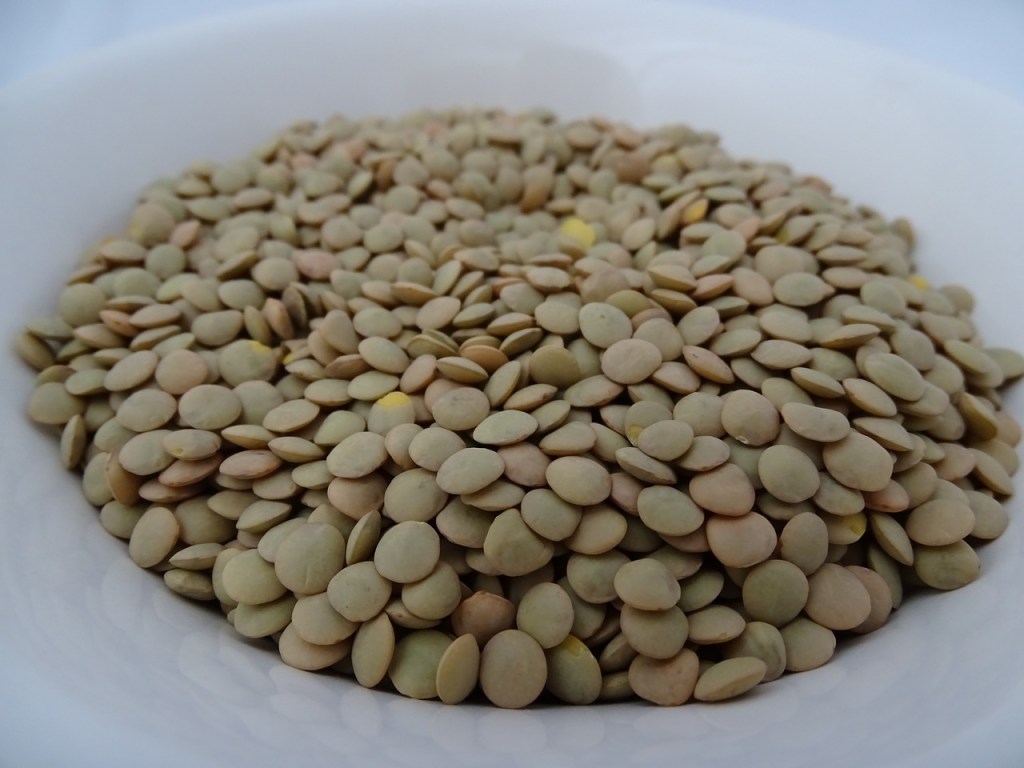
Brown Lentils
- These are the ones most commonly found in supermarkets.
- Size/shape – large, flat
- Color—light brown. Because the brown color can have a greenish tint, they are sometimes called green lentils. Do not confuse these with French green lentils.
- Taste – Mild, earthy flavor
- Uses
- They are intermediate in their ability to maintain their shape. They break down easier than French green lentils or Beluga lentils, but not as much as red and yellow. To keep them as firm as possible, do not overcook them.
- Use in soups, stews, curries, salads, pilafs or meat replacement dishes.
Green Lentils
- Some sources consider these a type of brown lentil, while others describe them as a separate variety. They are not the same as Puy lentils, though.
- Size/shape – similar in size/shape to brown lentils
- Color – a dusky green color
- Taste – earthy but slight peppery quality
- Uses are similar to brown but may maintain their shape better when cooked.
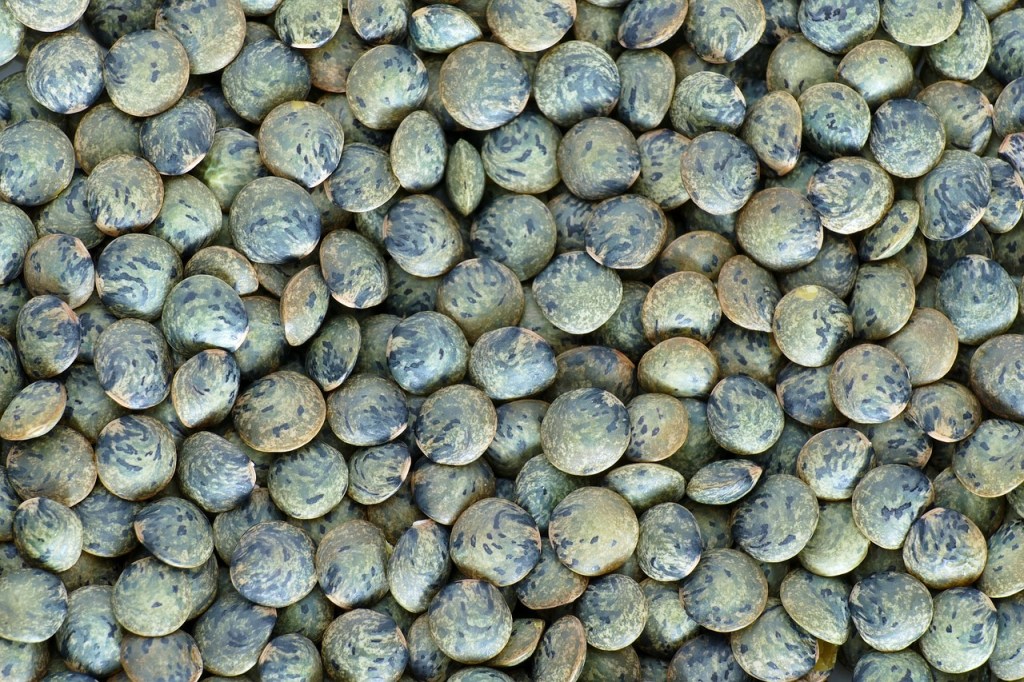
Lentilles du Puy (du Puy lentils)
- These are only grown in the Puy region of France and are known as French green lentils. Not all French green lentils are grown in this particular region of France. If they do not say “Puy,” they are probably the same variety but grown elsewhere.
- Size/shape – smaller and rounder than other lentils. They have a thicker skin than other green lentils, which gives them a firmer texture.
- Color – greenish with dark specks.
- Taste – If true “Puy” lentils, they will have mineral and peppery notes due to the volcanic soil in which they are grown. This may not be so if you have green lentils grown in other areas of France.
- Uses
- They take longer to cook.
- As they hold their shape, they work well in salads and soups, although they may require pureeing in the latter.
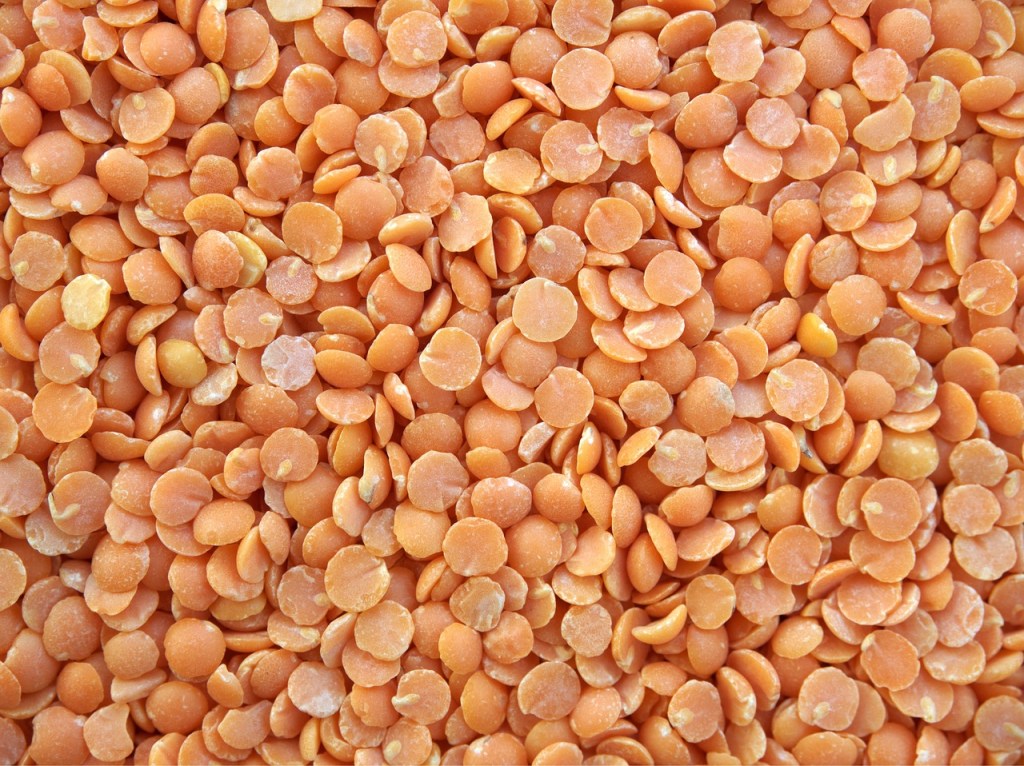
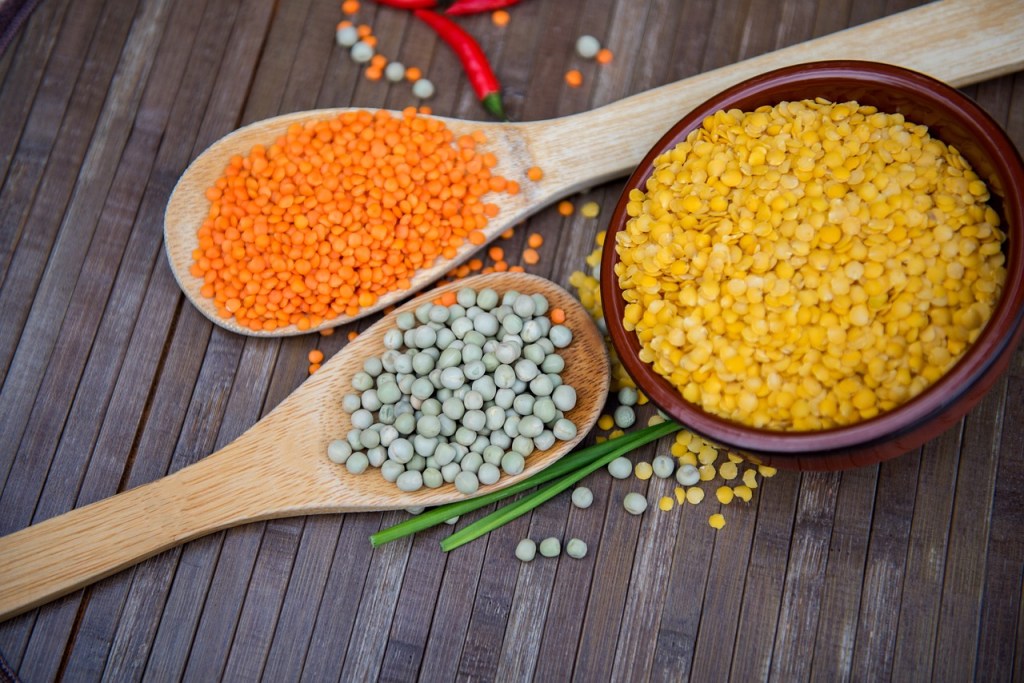
Red Lentils
- Size/shape—These are often sold as “split,” meaning their coat has been removed, and the inner part has been split in half.
- Color – reddish-orange
- Taste – Earthy and nutty with floral notes.
- Uses
- These cook more quickly than other lentils.
- They break down completely so they can be made into a puree.
- Good in soups and curries.
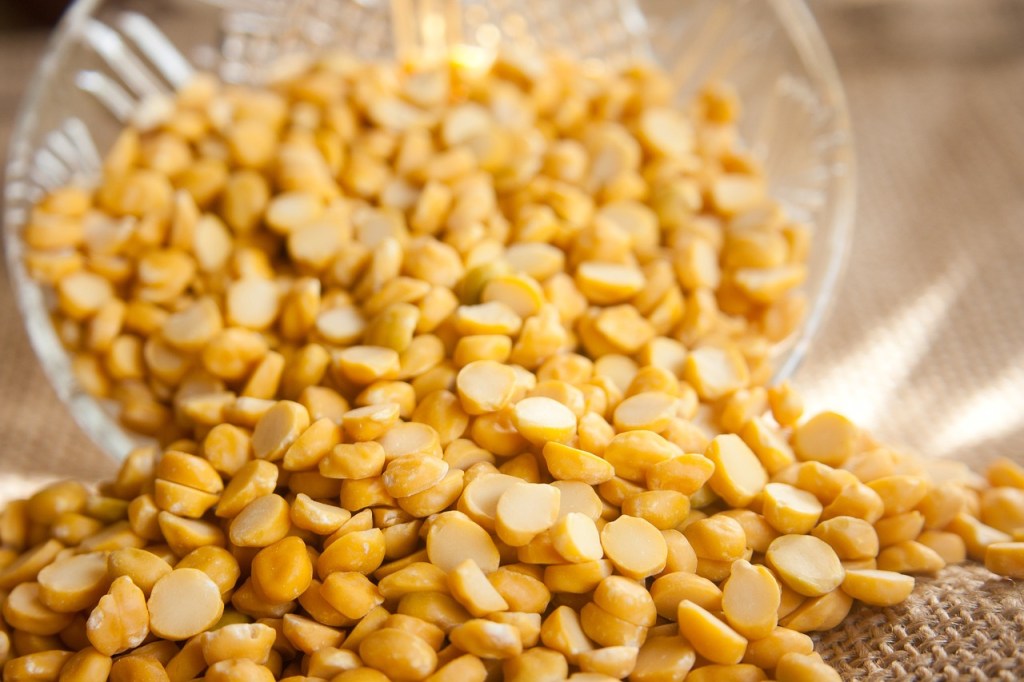
Yellow Lentils
- These are very common in Indian cooking.
- Color – yellow
- Flavor – slightly sweet
- Uses
- They become soft when cooked and can act as a thickener.
- Common in Indian dals, hummus, and as a thickener in soups and stews.
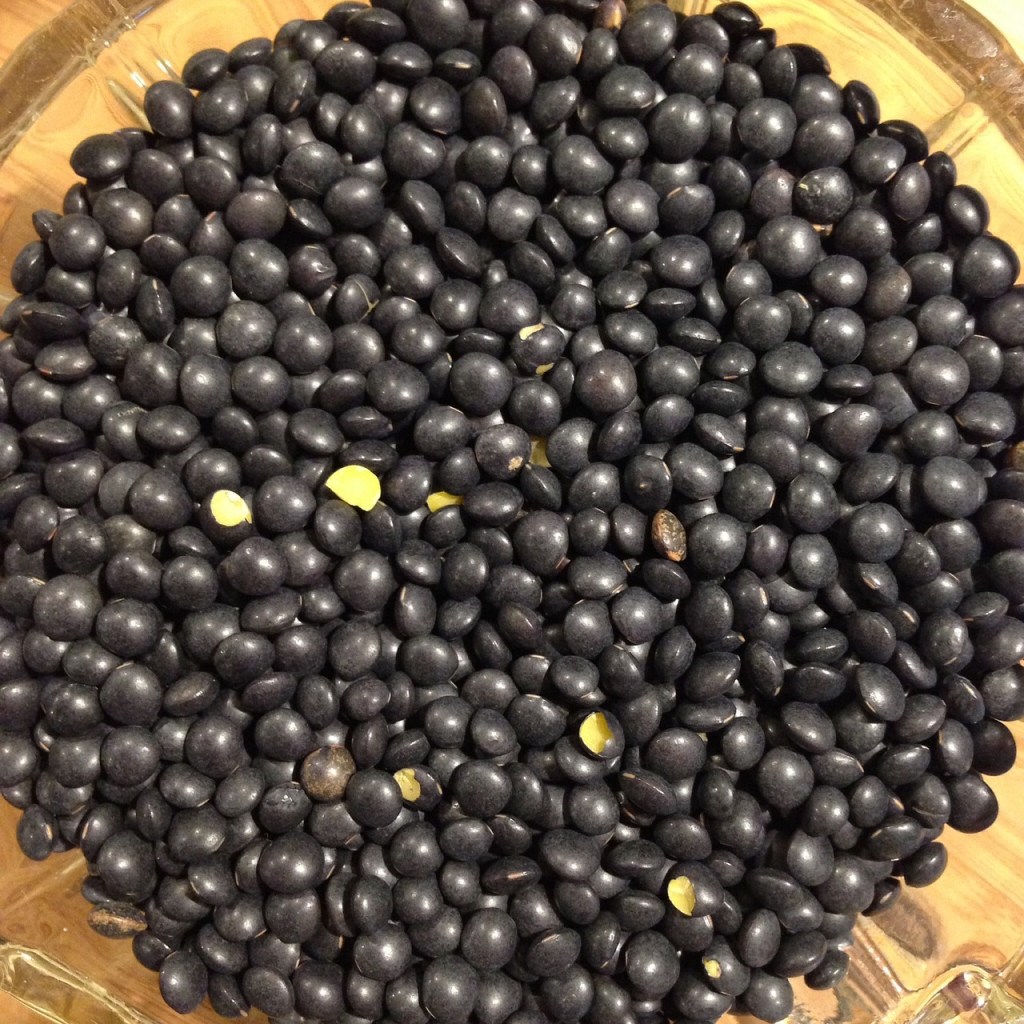
Beluga (black) Lentils
- They get their name due to their resemblance to caviar.
- Size/shape – very small and sphere-shaped
- Color – dark brown to black
- Taste – meaty and earthy
- Uses
- They have thicker skin, meaning they will retain their shape but take longer to cook.
- Use in salads and soups.
Cooking Lentils
- Purchase lentils that are as fresh as possible, as older lentils take longer to cook. If they are very old, they may not soften at all, despite how long you cook them. Some recommend buying from bulk bins as they tend to be fresher due to the more considerable turnover.
- Lentils should be rinsed before cooking to remove dust or debris.
- You should also sort through them to pick out any pebbles or grit that might be present.
- They do not need to be soaked before cooking as they have a relatively short cooking time.
- Cook lentils in plenty of water as they will swell in size as they cook.
- Bring the water (or broth) to a boil, then reduce to a low simmer to prevent the skins from splitting.
- Do not add salt until the lentils are cooked, as it can cause the lentils to stay crunchy rather than soft and tender. Some caution against adding acidic ingredients, such as tomatoes, for the same reason. However, others like to add them earlier to aid in flavor absorption.
- To add more flavor, add aromatics (onion, leeks, celery, carrots, garlic), spices, herbs, or even meat. Cook aromatics gently first before adding lentils.
- Be aware that brown and green lentils will be firmer and hold their shape better, while red and split green lentils will quickly break down.
- Cooking Times
- Brown lentils – 20-30 minutes
- French green lentils – 25-35 minutes
- Red and yellow lentils – 15-20 minutes
- Black Beluga lentils – 20-25 minute
- America’s Test Kitchen likes to make crispy lentils to top soups and salads. After a short brine (see below), they strain and pat them dry. After heating oil in a pan until very hot, the lentils can be fried until crispy and golden. After removing from the pan, they can be tossed in seasonings of your choice.
Brining
- As with other legumes, the skin of the lentils can easily rupture during cooking. To prevent this, America’s Test Kitchen recommends soaking them in a salt brine before cooking. They recommend a teaspoon of salt in a quart of water and soaking for an hour.
- Do not brine split lentils since their coat has been removed.
- Skip brining if you want a softer, more mushy texture.
Storage
- Dried lentils have a very long shelf life. Store in an airtight container away from light, heat and moisture.
- Cooked lentils may be stored in an airtight container in the refrigerator for up to a week or in the freezer for up to a month.
Are you a regular consumer of lentils? I must admit that I am not although my husband likes them in soup. I challenge all of us who are not lentil-eaters to set a goal of trying the different varieties. That is one healthy challenge!

 Culinary Journeys, LLC