Take a look in your refrigerator right now. Is there a container of sour cream there? Did you buy it for one recipe, and then it just sits there until it goes moldy, and you throw it away? What is sour cream anyway? All those questions and more are the subject of this Cooking Tip.
Sour cream is a dairy ingredient that adds a creamy and tangy flavor to your dishes. It can be used in both sweet and savory applications. It is made by adding lactic acid and bacteria to a combination of cream and/or milk and letting it thicken and sour.
Regular sour cream contains about 20% milk fat. Light sour cream is made from a mixture of milk and cream, resulting in a lower fat content. Non-fat sour cream has no fat, but it needs to be thickened. This is achieved by adding stabilizers and thickeners such as corn starch, gelatin, carrageenan, and guar gum.
Brand Differences
There are differences in the ingredient lists between brands. Just check the labels.
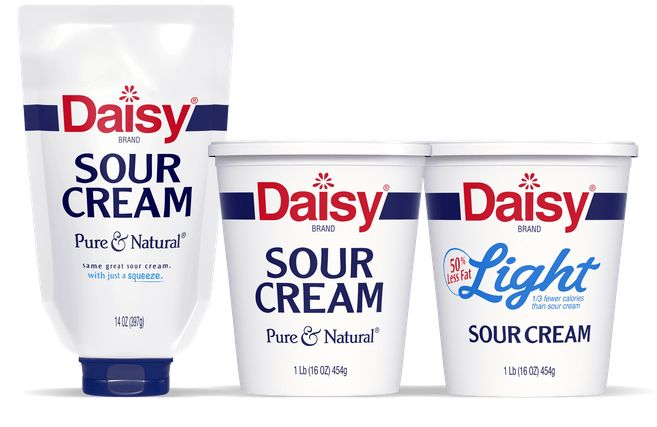
- The Daisy Brand list of ingredients is only “cultured cream.” This is the top choice of America’s Test Kitchen.
- Knudsen’s brand shows “cultured pasteurized Grade A cream (from milk), enzymes.”
- My store brand has this much longer list – “cultured cream and skim milk, whey, modified corn starch, cultured dextrose, gelatin, sodium phosphate, guar gum, carrageenan, sodium citrate, calcium sulfate and locust bean gum.” I know which one I would rather buy for the minimal difference in price!
- The “Natural” store brand is better, showing “cultured cream and skim milk, enzymes.”
Uses for Sour Cream
- In cold dishes, it:
- Adds creaminess, mild acidity and a bit of tang.
- Acts as a binding agent to hold ingredients together, as in a chicken salad.
- Can be a replacement for mayonnaise with a lower fat content but it won’t be as acidic.
- Examples
- Use in deviled eggs in place of mayonnaise.
- In pasta/potato salads, swap sour cream for all or part of the mayonnaise.
- Try as a sandwich spread.
- It makes for creamy dressings and dips.
- Add to whipped cream to add another flavor dimension. Add ¼ cup to 1 cup of heavy cream along with your sweetener of choice. Whip together with an electric mixer.
- In hot dishes, it:
- Balances heat with its tanginess.
- Adds richness to baked goods.
- Can be a wonderful finishing touch with a hint of acidity.
- It can act as a thickening agent for sauces and soups.
- For sauces, gradually whisk it into the warm sauce to prevent curdling and separation.
- For soups, add towards the end of the cooking process.
- Examples
- Add to soup or chilis as a topping/garnish.
- Top your tacos, burritos, and baked potatoes.
- Add to a pasta sauce to increase creaminess.
- In cakes/muffins, it can give you a moist and tender crumb. The acidity also helps balance the sweetness. Substitute a portion of the liquid in your recipe with sour cream.
Make your own
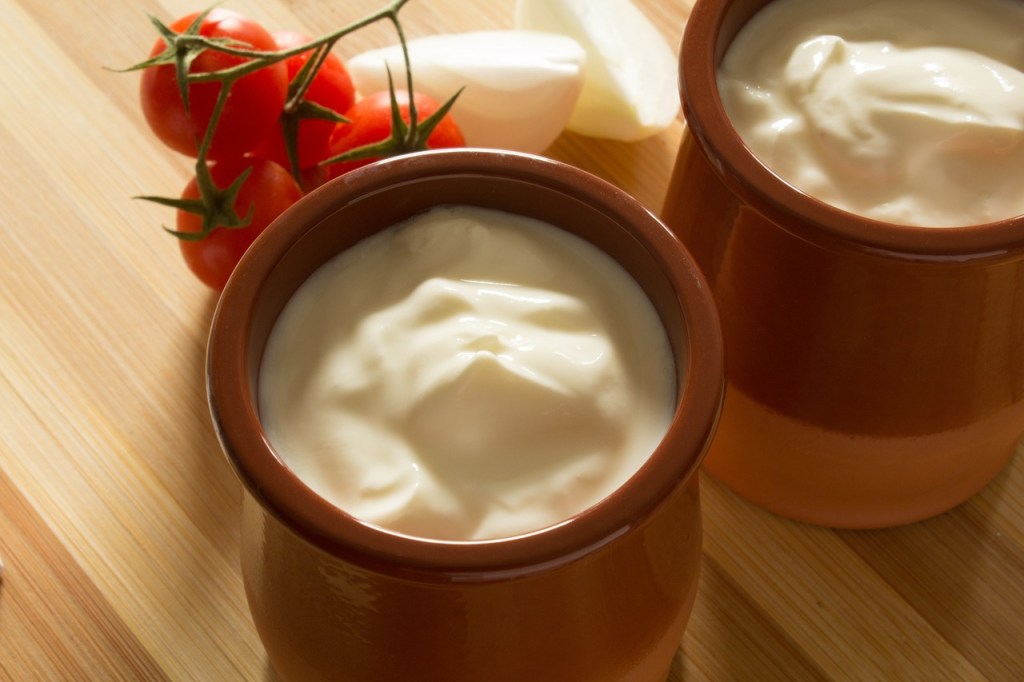
Some people like to make their own as they control the ingredients that go into it, and they only have to make the amount they want. Here are some ways to do that.
Buttermilk technique
- Combine 1 cup heavy cream and ¼ cup buttermilk in a sterilized jar and seal. Shake vigorously to combine.
- The bacteria in the buttermilk will ferment the cream, which leads to souring and thickening.
- Allow to sit at room temperature for 24 hours.
- Store in refrigerator for up to 2 weeks.
- Replace some of the cream with whole milk, half-and-half, or light cream if you’d prefer a lower-fat version. Just keep in mind that your sour cream will not turn out quite as thick if you decrease the fat. To thicken, you can pour through cheesecloth.
Vinegar/lemon juice technique
- This is similar to the buttermilk technique but uses a different acid – either lemon juice or white vinegar.
- Combine ¼ cup room temperature milk and either 1 tablespoon of lemon juice or 2 tablespoons of white vinegar. Thoroughly combine.
- Add 1 cup room temperature of heavy cream. Combine.
- Let sit in a warm place for at least 12 hours to a maximum of 24 hours.
Powdered sour cream
Many of us use powdered buttermilk. There is also powdered sour cream that you can reconstitute just like powdered milk. The former is easy to find in our markets, whereas the latter will probably have to be purchased online.
Substitutions
If you do not have any on hand for a particular recipe, you can try the following substitutions.
Yogurt
- America’s Test Kitchen tried substituting Greek yogurt for sour cream in three recipes.
- In biscuits and a sour cream sauce, the yogurt did fine.
- In beef stroganoff, the yogurt with its lower fat content broke due to the heat.
- Use plain yogurt, preferably Greek, in equal parts.
- If you are not using Greek yogurt, consider draining it through a cheese-cloth-lined sieve over a bowl for at least 30 minutes.
- Since yogurt is only 10-12% fat, it will not give you the same richness but can certainly be used.
- For baking, for one cup of sour cream, use one cup of yogurt plus one teaspoon of baking soda.
- For a dip, combine 1 cup sour cream with ¼ cup yogurt and 1 cup cottage cheese.
- For a sauce, mix 1 cup of sour cream, 1 cup of yogurt, 1 tablespoon of flour, and 2 teaspoons of water.
Buttermilk
- Try plain buttermilk. Since this is thinner than sour cream, many like to add softened butter to improve the texture.
- Also, use less than the amount of sour cream called for, or it might be too liquid.
- For baking, try ¾ cup buttermilk + ⅓ cup softened, unsalted butter.
Cottage cheese or Cream cheese
- The texture of both of these items is different than sour cream. So, you should blend them with some liquid to get a consistency similar to sour cream.
- For dips, combine 1 cup cottage cheese and ¼ cup yogurt/buttermilk in a blender.
- For cream cheese, blend together 6 ounces of cream cheese and three tablespoons of milk.
Storage
- To help it last as long as possible, store it in the refrigerator sealed tightly. It should keep for about three weeks.
- Signs of it going bad are visible mold, the aroma of mold, or other off-smell (even if you do not see mold), or if it is taking on an off-white color.
- If you see mold, just as with soft cheeses, you should not just scrape off the moldy part as the mold can extend into the product even if it doesn’t appear so.
- Not a problem if it has separated. This is normal, and you can either drain it off or mix it back in.
- When spooning it out of the container, always use a clean spoon to prevent introducing pathogens into the sour cream.
- If you can’t use it up, try freezing it. Because the texture will suffer, reserve your frozen sour cream for use in cooked dishes, not fresh. Allow it to thaw in the refrigerator. If you add it to soup or similar, toss it in frozen.
Sour cream is such a simple ingredient, but it can add so much to your dishes. I am sure you already use it, but if not, pick some up when you are in the store or try making your own!

 Culinary Journeys, LLC