I ran across a blog post a day or so ago titled What’s Going on with Butter? It was very interesting and I thought I would share with you in this Cooking Tip the controversy about modern-day butter. This is not a Tip about using butter in your kitchen. For that discussion, see this prior Tip.
There are really two parts to this discussion. The first is from a couple of years ago and was about Canadian butter. The second was much more recent and involved baking disasters during the 2023 holiday season with US butter.
Let’s start with Canada. What Canadian bakers were noticing was that the butter was staying hard despite being left at room temperature to soften. People were so upset about it that it became known as “Buttergate.”
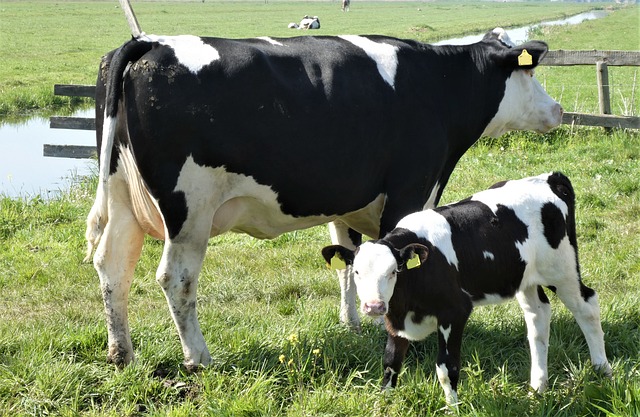
The culprit was thought to be palm oil products that were being added to cattle feed. This was being used as an energy supplement and was not limited to Canada. It was also being used elsewhere in the world. Palmitic acid is a saturated fatty acid that occurs naturally in some animals and plants. The Canadian dairy industry said increased demand during the pandemic caused them to add palmitic acid (from palm oil) in greater quantities to boost milk output and increase the fat content.
The theory was that the palm fats in a dairy cow’s diet altered the saturated fatty acid profile of the resulting milk fat, which could possibly cause the butter to be firmer at room temperature. Recall that saturated fats are those that stay solid at room temperature, whereas unsaturated fats are liquid at room temperature.
Not all agreed, though. A food science professor at the University of Guelph in Ontario, Canada, disputed that the addition of palm products could lead to the hardening of butter. He did admit, though, that these products could affect the melting point of the butter.
Laboratory testing of 17 different Ontario butter brands was done. The testing showed only a relatively weak correlation between the amount of palmitic acid and the relative hardness of the butter. They did find that, on average, softer butters had less palmitic acid. However, it was not across the board, as some soft samples had more palmitic acid than hard samples. The conclusion was that there was more involved in the butter’s texture than just the level of palmitic acid.
Other possibilities that were put forward were:
- Diet – There are many reasons that the cow’s diet might change, and these changes are reflected in the milk and related products.
- Milking machines – Martin Scanlon, dean of agriculture and food sciences at the University of Manitoba, said that milking machines may play a role. According to him, “One factor is the recent rapid adoption of robotic milking machines on dairy farms. Cows no longer wait to be milked but enter an automated stall when they are ready to be milked. As a result, the milk fat globules do not stay in the udder for as long, resulting in hard fat crystals forming, which may impact the firmness of the final product.
- Increased demand – During the pandemic, demand for butter was up 12%. Due to this, Scanlon postulated, “Butter makers may have reduced the aging time for the milk fat and sped up cooling after churning to meet the demand. That quick cooling could leave small, hard fat crystals in the butter. Once you start cooling these fat crystals very fast, there’s actually a consequence on the hardness.”
An article in the Journal of Dairy Science was published in September 2021, and it discussed a butter analysis done by scientists from the Department of Food Science at the University of Guelph. They not only looked at the palmitic acid content but also the oleic acid content. The latter is a mono-unsaturated fat and is a principal component of olive oil. Their “preliminary results suggested that butter firmness … was positively correlated with palmitic acid content, negatively correlated with oleic acid content, and positively correlated with the palmitic acid: oleic acid ratio.”
They also postulated other factors that could affect butter’s texture. They said “In a high-throughput manufacturing plant, if fats do not spend enough time being softened by mechanical working and are not tempered at the appropriate temperature for some time, they become harder and more brittle. Thus, we assume that the combination of increased palmitic acid content and higher plant throughput due to large increases in butter demand interacted to create the harder-than-usual butter.”
So, was this phenomenon related to cattle feed or another negative outcome from the pandemic? No absolute conclusions were ever made.
Now, what about the US? I didn’t find reports of anything similar to Buttergate, although, as far as I can tell, palmitic acid is also used in cattle feed in the US.
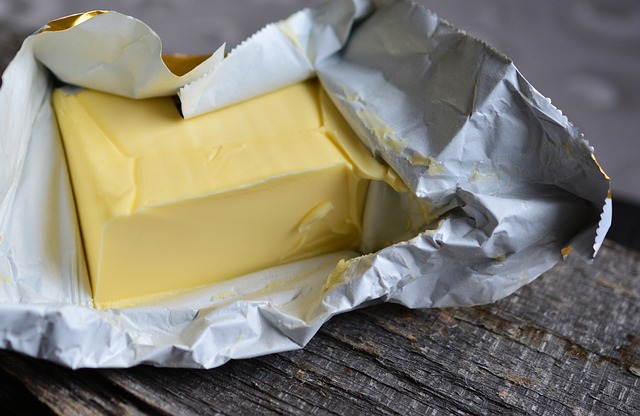
What I did find was a meltdown during the 2023 holiday season over ruined baked goods that was attributed to a change in Costco butter. Bakers noted failures with recipes that had always been successful in the past. When they switched to a different butter, supposedly the problem resolved. People postulated that the Costco butter had a higher water content than it had in the past and, therefore, a lower butter fat content.
Devon O’Brien of AllRecipes.com decided to test the Costco butter against other brands to see for himself. He put the butters to the test in pie crusts and cookies. He did find pie crusts made from the Costco butter were drier and more crumbly than the pie crusts made with other butters. However, after resting overnight in the refrigerator, the pie crusts were indistinguishable. He noticed no difference in cookies made with the different butters. His conclusion was that he thought there was a possibility that the Costco butter had more water but found no reason to stop using it.
I cannot confirm or dispute either of these stories. First, I do not use Canadian butter and so, cannot comment on the hardness issue. Second, I do not shop at Costco (I know – that might be unbelievable!) and have never used their butter. My go-to butter for baking has always been Land O’Lakes unsalted butter and I noticed no problems using it in my baking.
Although their testing is a few years old, America’s Test Kitchen’s favorite butter for baking is Challenge unsalted butter, although Land O’Lakes was on their recommended list along with some other brands. Bon Appetit likes Cabot butter, while Food 52 says Trader Joe’s butter is unbeatable. Consumer Reports gave another vote for Land O’Lakes.
What about you? What is your favorite butter for baking? If you are a Costco fan, did you notice any problems over this holiday season? Let me know!

 Culinary Journeys, LLC