In the summer, I love to use my Breville countertop oven. It heats up quickly without heating up the house, uses less energy than my wall ovens, and works great. Among other settings, it has both a “Roast” and a “Bake” setting. I would suspect that most of us think they are the same thing. But are they? That is the subject of this Cooking Tip.
Both of those terms refer to methods of dry heat cooking. Here is another Tip I wrote about these and other dry heat cooking techniques. Here are the definitions of roast and bake according to The New Food Lover’s Companion.
- Bake – To cook food with dry heat, as in an oven.
- Roast – To oven-cook food in a shallow, uncovered pan.
I did not find that very helpful. I next consulted the Culinary Institute of America’s The Professional Chef. Their definitions were not much better.
- Bake – To cook food by surrounding it with dry heat, as in an oven.
- Roast – To cook in an oven.
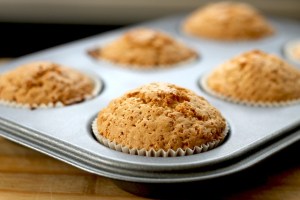
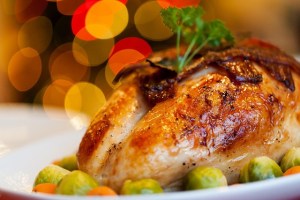
When I delved into the interior of this culinary textbook, there was a bit more information. They explained that both baking and roasting are methods whereby the food is cooked with indirect heat in an oven. They explain that roasting involves cooking with dry, heated air held in a closed environment (an oven.) As the food is heated, the liquid inside the food turns to steam, penetrating the food. In its most common usage, roasting is applied to large cuts of meat that give you multiple portions or whole birds. Often, the meat is seared first in hot fat on the stovetop. Baking is better used for portioned foods that are cooked in the oven. It is typically not preceded by searing.
Chefs who distinguish between these terms point out two differences – the temperature of the oven and the type of food.
Temperature of oven
- Roasting generally calls for higher temperatures than baking, often above 400°F.
- Baking usually takes place at 375°F or lower.
Type of food
- Roasting is called for with meat, poultry or vegetables. These foods all have a solid structure before starting the cooking process.
- Baking is recommended for foods that do not have structure before baking, such as cakes and cookies.
Another difference is that roasting is generally done in an uncovered pan. Baked items may or may not be covered during the cooking process.
That may be interesting academically, but what difference does it make practically? Not much. My wall ovens come with a “Bake” setting, which I use 99% of the time. My Breville countertop oven does come with both settings, but when you consult the manual, the instructions for Bake and Roast read extremely similar. A Breville video, though, explains that the “Element IQ” part of these Breville smart ovens causes the heating elements to cycle differently for roasting and baking to compensate for the difference in pans. I must admit that I did not know that.
As summer is exiting and the cooler temperatures of fall and winter arrive, roasting and baking are skills we will probably use more frequently. Unless you have an oven similar to my Breville, I wouldn’t worry too much about the terms. Just concentrate on making delicious dishes to serve to your friends and family!

 Culinary Journeys, LLC