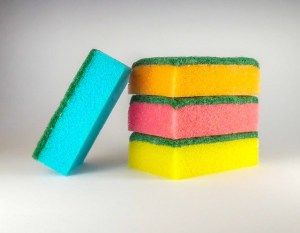
Do you use sponges in your kitchen? I certainly do. They are inexpensive and are effective. Most of us probably also know that they can harbor germs. They are perfect incubators for microbes, some of which could make us sick. What we can do about this is the subject of this Cooking Tip.
The National Sanitation Foundation (NSF) has been in existence since 1944, and they say they are “dedicated to improving human and planet health.” As part of this, they develop public health standards and they test, audit and certify products and services. A 2011 NSF study found 77% of sponges and dish cloths in US homes contained coliform bacteria, 86% had yeast and mold, and 18% were contaminated with Staph bacteria.
Experts tell us to microwave the sponge, boil it or send it through a dishwasher cycle. Other recommendations include soaking in a vinegar or bleach solution. A 2017 study in Scientific Reports should cause us all to re-think that.
This study said that “sanitation by boiling or microwave treatment has been shown to significantly reduce the bacterial load of kitchen sponges and can therefore be regarded as a reasonable hygiene measure.” However, the study also demonstrated that regularly sanitized sponges did not contain less bacteria than uncleaned ones. Moreover, the above cleaning methods even increased the presence of two bacteria. Their recommendation is to replace your kitchen sponges on a weekly basis and, although saying more studies need to be done, they say “prolonged application of sanitation measures of kitchen sponges is not advisable.”
Other suggestions for keeping your kitchen clean include using different sponges for dishes and countertops and throwing away any smelly sponges. It is also advised to allow your sponges to dry out between uses as when wet, the sponge is a perfect environment for bacterial growth. Cooks Illustrated did testing on sponges, half of which had the water squeezed out before putting in an open plastic bowl and half that were left full of water. When a lab analyzed the sponges for bacteria, the wrung-out ones had 20 CFU/ml (colony forming units per milliliter) whereas the wet ones measured 500,000 CFU/ml.
Other recommendations are to use cleaning items that dry quickly such as dish cloths or towels. However, those should be thrown into the laundry at the end of every day. It is interesting that the FDA does not allow the use of sponges in restaurants.
Although the USDA has in the past recommended the above cleaning methods, a 2023 statement on their website says “Kitchen sponges are potential sources of bacteria and are difficult to clean. Microwaving or boiling kitchen sponges may reduce some of the bacterial load; however, these methods alone are not adequate to ensure that your sponge will reduce potential cross-contamination of hands, kitchen counters, and food. If you use sponges, buy new ones frequently.”
I must admit that I do not change out my sponges nearly enough. I need to do better. What about you? Isn’t keeping your kitchen clean and you and your family healthy worth it? I think so.

 Culinary Journeys, LLC